



Best UK Kiteboarding Spots for Spring: Tides, Wind and Crowd Tips
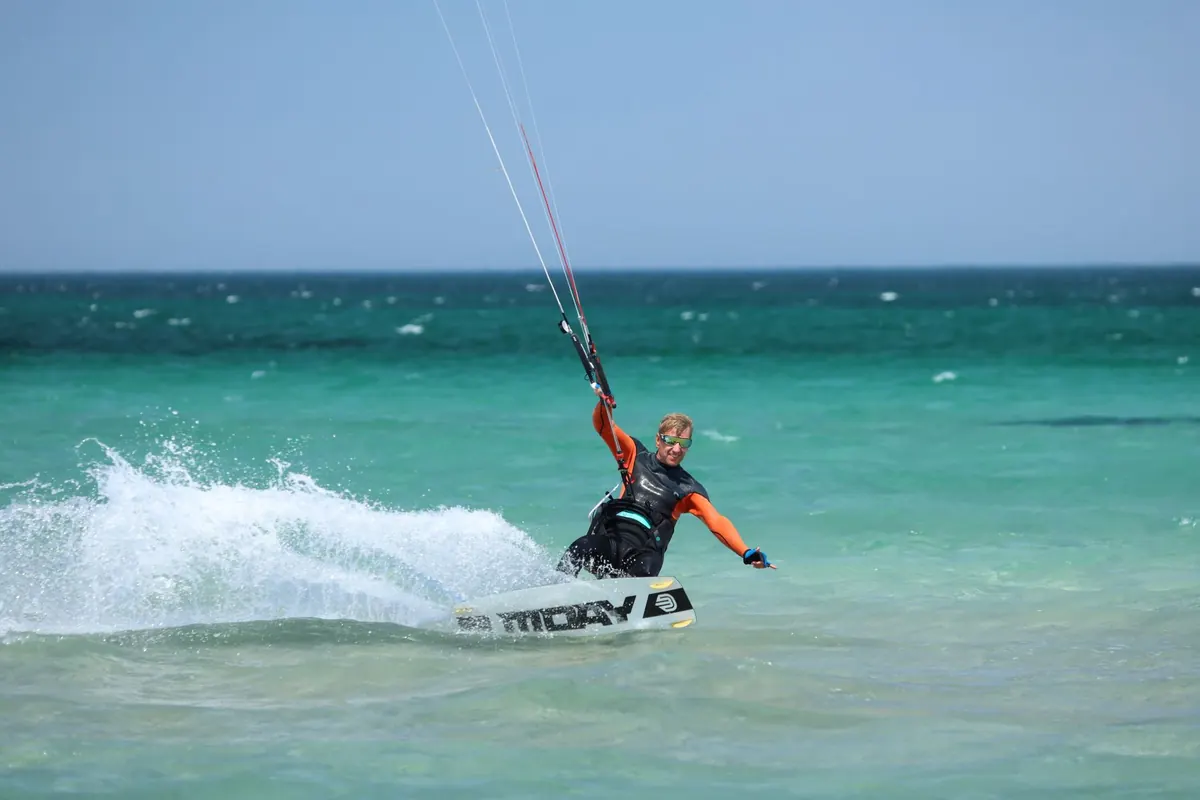
Spring on the UK coast is a negotiation. One weekend you rig a 9m in sunshine and sail in a 4/3; the next you are back in the hood, boots and gloves, wondering why the forecast lied to you again. The payoff is that spring hands you more usable days than any other season — if you pick the right coast for the wind, time the tide properly, and know when to walk away from the car park.
What spring actually does to the UK coast
Sea temperature lags weeks behind air temperature. Even when the air is pleasant in April, the water is still close to its winter low, and it takes until late spring before the chill properly lifts. That matters more than any wind forecast: cold water shortens sessions, stiffens your hands and makes every mistake more expensive.
The land, though, starts warming faster than the sea. That is what builds the sea breeze — a thermal that can add a useful handful of knots to an otherwise light afternoon on west-facing beaches. It also means the wind often fills in later than the morning forecast suggests, and dies just as quickly at the end of the day.
Daylight is the other spring gift. From late March you can finish work, drive to the beach and still get an hour on the water before dusk. Those evening sessions are usually the quietest of the week, and often the best.
Match the wind direction to the coast
When the Atlantic is in charge you get south-westerlies, and the west coast — Cornwall, Devon, south and west Wales, the north-west of England — takes the cleanest, most consistent wind. When high pressure sits over the continent you get easterlies, and the east coast becomes the place to be while west-coast spots turn offshore and unpleasant.
Cross-shore is the sweet spot: side-on wind, clean faces, an easy walk back up the beach. Onshore is workable but usually messy, with waves dumping on the inside. Offshore in spring is a no. The water is cold, help is slow to reach you, and the beach is full of families who did not come here to watch a kite tumble through a picnic.
Watch for squalls, too. Spring showers often arrive on a dark, hard-edged line with a sharp jump in wind. If you can see one coming, come in early, or rig one size smaller than you think you need.
Tides: the bit most people get wrong
Tidal range around the UK varies enormously. Some beaches gain hundreds of metres of shallow water at low tide; others barely change. A spot that is perfect at mid-tide can be a choppy washing machine at high water, or a mudflat at low.
- Check tide times for the specific beach, not for the nearest town.
- Know whether the spot works on low, mid or high water — and whether a falling or rising tide is safer.
- Spring tides (around new and full moon) mean a bigger range and stronger currents; neap tides mean less water movement and often easier launches.
- Look for cut-offs: sandbars, estuary channels and causeways that quietly flood behind you while you are sailing.
Estuary and harbour spots have their own rhythm and their own rules, so ask at a local shop or kite school before you launch. It is also worth knowing that many popular beaches have seasonal kite zones or summer restrictions, so check signage on arrival rather than assuming last year's rules still apply.
Spring spots, region by region
South-west: Cornwall and Devon
Gwithian and Towan in St Ives Bay are the classic spring choice: long sand at low water, plenty of room, and reliable south-westerlies. Nearby Hayle estuary offers flat water when the swell is up, though the tidal flow is strong and not a place to learn. Watergate Bay and Perranporth work well on westerlies, and both get busy as soon as the sun appears.
South and south-east
Camber Sands in East Sussex is a spring favourite — huge shallow flat water at low tide and a decent south-westerly fetch. Greatstone and Littlestone in Kent offer sheltered lagoon-style water that suits early-season sessions when you want flat and forgiving. West Wittering and the Chichester Harbour launches are tide-dependent and heavily used by other water users, so keep clear of swimmers and moored boats.
Wales and the north-west
Rhosneigr on Anglesey handles a wide range of wind directions and has a real community around it. Llangennith on the Gower is one of the best waves spots in the country on a south-westerly, but the rip currents are serious and it is not a beginner's beach. Further north, Ainsdale and Southport give you shallow tidal lagoons, West Kirby's marine lake is a superb flat-water option, and Fleetwood works on the right tide.
East coast and Scotland
Hunstanton, Brancaster and the north Norfolk beaches come alive on northerlies and north-westerlies, while Tynemouth and Beadnell catch the North Sea swell. In Scotland, Troon and St Andrews are the well-known options, Gullane and Longniddry suit easterlies, and Tiree is worth the ferry if you want wind and nothing else for company.
Beating the crowds
Spring crowds follow school holidays and sunshine, not wind. A few habits make a big difference:
- Ride before 9am or after 6pm. Light is better, wind is often steadier, and the beach empties.
- Avoid the Easter break and bank holiday weekends if you can, or accept that you will be queuing for parking.
- Launch away from the kite school's teaching zone — give learners space and they will give you space.
- Pick the second-best spot. The famous beach with the car park is often twice as busy as the one twenty minutes further along the coast.
Cold-water kit and a reality check
A well-fitted 5/4 wetsuit with hood, boots and gloves is still the sensible spring kit in most of the UK, particularly in the north and Scotland. Cold water shock is real: keep your first session short, stay close to shore, and never kite alone. Tell someone where you are going and when you expect to be back, and carry a means of signalling help.
Check your gear before the season starts — lines, bar, bladder, chicken loop and harness — and replace anything that has been sitting damp in a bag since October. If you have a heart condition, a history of cold-water reactions or any ongoing medical concern, speak to your GP before getting back in. Rescue services are there for emergencies, not for a forgotten harness.
Plan the day, not just the forecast
The most reliable spring routine is simple. Pick your coast based on wind direction, not loyalty. Check the tide for the exact beach. Arrive early, walk the launch, and talk to whoever is already there. Rig conservatively, keep your first session short, and leave a little in the tank for the evening. Spring rewards patience and local knowledge far more than it rewards enthusiasm.
Photo: Serg Alesenko / Pexels