


Reading UK Wind, Tides and Weather for Kiteboarding: A Simple Explainer
Reading UK Wind, Tides and Weather for Kiteboarding: A Simple Explainer
Most wasted kite trips in the UK are not caused by a bad forecast. They are caused by a good forecast read badly. A 20-knot south-westerly at one end of a bay can be a holey 12 knots at the other, and the same wind that gives you a lovely flat-water session at high tide can hand you a shorebreak and a long walk back up the beach three hours later.
Reading wind, tide and weather together is the most useful skill a UK rider can build. It costs nothing, works at every spot, and turns guesswork into a plan.
Think in wind windows, not wind averages
A forecast number is an average over an hour, sometimes over a grid square tens of kilometres wide. Your session is neither. What you care about is the window: the two to four hours when the wind is steady enough to rig once and stay out.
Most UK wind arrives with a depression and its fronts. A typical autumn system gives a building southerly ahead of the cold front, a squally, shifting hour as the front passes, then a veering westerly behind it that is often stronger and more consistent than what came before. Learn that pattern on a pressure chart and you stop chasing the wrong half of the day.
Summer sea breezes are gentler. They fill in through the late morning as the land warms and drop away by early evening. Wind that will die at dusk usually fades first at the top of the tide, which matters if your launch disappears underwater.
The practical trick is to look at the shape of the wind curve, not just the peak. A forecast showing 25 knots at 2pm but 12 knots at 11am and 10 knots at 5pm is really a two-hour window in the middle of the day. If you can only ride in the morning, that day is a no-go. If you can move your session, it is a good day. Read the curve, then decide whether it fits your life.
Gusts, lulls and the gust factor
Forecasts quote a mean wind speed and a gust. The gap between them tells you more than either number alone. A steady 18 gusting 22 is a comfortable day on a 12m kite. An 18 gusting 33 is a different sport, and the mean is a lie you should not rig for.
Gusts come from three main sources:
- Showers and squall lines. Convective cloud drags fast air down to the surface. Dark, towering cumulus upwind means the wind will lift by ten knots or more, then drop just as quickly. If you see a black line on the horizon, land before it hits.
- Topography. Headlands, cliffs and gaps between hills accelerate wind. A spot that looks sheltered on the map can funnel a gust through a valley and turn a 15-knot day into a 25-knot one. Trees and buildings on the beach create rotors that make the wind holey and unpredictable.
- Thermal effects. Sea breezes add to or fight against the gradient wind. On a hot summer afternoon, a sea breeze can double the wind speed near the coast, but it dies at sunset. If the gradient wind is offshore, the sea breeze may never establish at all.
When you rig, think about the lulls as much as the gusts. If the lull is 12 knots and your kite is sized for 22, you will be swimming. If the gust is 30 and your kite is sized for 18, you will be overpowered. The safest choice is usually the kite that keeps you planing in the lull and only mildly lit in the gust. If that kite does not exist, the window is too unstable and you should wait.
Tides: the half of the forecast nobody reads
Tide is not just about whether you can stand up at the launch. It changes the shape of the water, the strength of the current, and the direction of the wind near the beach. On the south coast, a rising tide can turn a flat lagoon into a washing machine as the water hits a sea wall. In an estuary, the tide can run at four knots and turn a downwinder into a one-way trip.
Wind against tide
The ugliest UK conditions usually come from wind blowing against a strong tidal current. The wind stacks up short, steep chop that is exhausting to ride and hard to predict. The Solent and the Bristol Channel are famous for this. If the wind is 20 knots and the tide is running at 3 knots in the opposite direction, you will feel like you are riding through a ploughed field. If the wind and tide are aligned, the same 20 knots feels smooth and fast.
Tide height and launch spots
Many UK spots only work at certain heights. A beach that is perfect at mid-tide can be a minefield of rocks at low tide and a shorebreak at high tide. A harbour that is flat at high water can be dry sand at low water. Before you drive anywhere, check the tide table and ask yourself three questions: Can I launch? Can I land? Where will the water be in three hours? If you cannot answer those, you are gambling.
Reading the sky and the sea: local clues
Forecasts are a starting point. The sky and the water give you the final update. Look upwind and look at the surface.
- Clouds. Flat grey stratus usually means steady wind. Puffy cumulus means gusts. A dark, anvil-shaped cumulonimbus means leave the water. Cirrus streaming across the sky often signals a change in the jet stream and a shift in wind direction within a day.
- Wind streaks. Dark patches on the water are gusts. If they are small and scattered, the wind is patchy. If they are long and organised, the wind is stronger and more consistent. If they are moving fast towards you, get ready for a big increase.
- Flags and other riders. A flag that is snapping straight is a steady wind. A flag that is wrapping and flapping is a gusty wind. If the local kiters are on small kites, there is a reason. Ask them.
- Sea state. Small, regular waves mean the wind has been steady for a while. Choppy, confused water means the wind has just arrived or is fighting the tide. If the water looks like a washing machine, it probably is.
Putting it together: a simple pre-session routine
You do not need a meteorology degree. You need a routine that takes five minutes and stops you from rigging the wrong kite at the wrong spot. Here is a simple one that works anywhere in the UK.
- Check the pressure chart. Where is the low? Where are the fronts? Is the wind ahead of or behind the front? This tells you the big picture.
- Check the wind forecast. Look at the mean, the gust, and the shape of the curve. Identify the most stable two to four hour window.
- Check the tide. Note the high and low times, the height, and the direction of the current. Cross-reference with your spot knowledge.
- Check a live station or webcam. A real-time reading from a nearby anemometer is worth ten forecast models. If it is blowing 25 when the forecast said 15, believe the anemometer.
- Talk to locals. Every UK spot has its own quirks. The person who sails there every week knows more than any app.
- Rig conservatively. If you are between two kite sizes, take the smaller one. You can always come in and change. You cannot always swim back.
Spot-specific examples
A south coast bay
Imagine a bay with a south-westerly forecast of 18 gusting 28. At high tide, the water is deep right up to the beach and the wind is cross-onshore. It looks perfect. But as the tide drops, a sandbar appears upwind and the wind accelerates over it, creating a gusty, shifty launch. By low tide, the beach is a long walk from the water and the wind is offshore. The same forecast gives you two completely different sessions. Read the tide, and you choose the good one.
An estuary
Estuaries are tide machines. A north-westerly that is cross-shore at one state of tide can become dead onshore or dead offshore as the water moves. The current can also create a conveyor belt that carries you upwind or downwind without you noticing. If the wind is against the tide, expect steep chop and a lot of spray. If the wind is with the tide, expect flat water and fast reaches. Check the tide times before you even pump your kite.
The takeaway
A forecast is a probability, not a promise. The best UK riders are not the ones with the most expensive gear. They are the ones who look at the wind, the tide and the sky together, pick their window, and rig for the lulls. Do that, and you will spend more time riding and less time standing on the beach wondering what went wrong.
Read the window, respect the tide, and never rig for the gust.
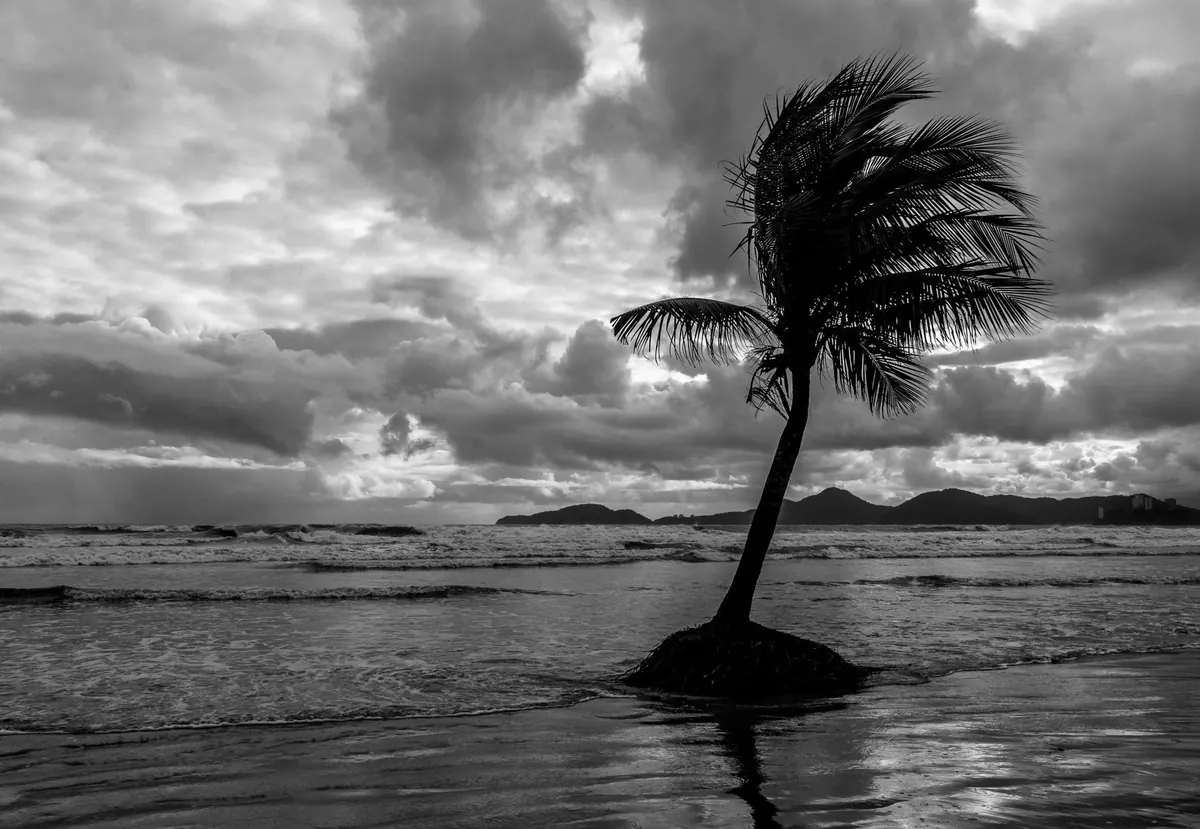
Photo: Douglas Navas / Pexels